The Art of Shelving: How to Arrange Vases and Books Like a Professional Stylist
We all have that one bookshelf or built-in unit in our homes. You know the one—it starts with the best of intentions, but over time, it slowly devolves into a chaotic catch-all for old paperbacks, random chargers, and forgotten knick-knacks. It is a common story, but that visual noise quietly adds to our daily stress. Instead of being a feature that brings you joy, it becomes a corner of the room your eyes naturally try to avoid.
Welcome back to the Kiruofficial journal. I’m Pratiksha, and today we are tackling one of the most common design dilemmas in the modern Indian home: how to style your shelves so they look intentionally curated rather than accidentally cluttered.
When space is at a premium in our bustling cities, our shelves need to work overtime. They must offer practical storage while also serving as a visual reflection of who we are. We often view shelving purely as a utility—a place to simply put things away. But think of it instead as a vertical gallery of your life’s journey. It is the perfect canvas to showcase your favorite reads alongside a sculptural ribbed vase, a cherished heirloom, or a piece of raw terracotta that grounds the room. By applying the principles of “Slow Decor” and a few professional styling secrets, you can transform your shelving unit from a dusty storage rack into a breathtaking, tactile focal point.
Styling your shelves isn’t about rushing to buy a dozen matching decor pieces just to fill the empty gaps; it is a mindful, deliberate process of choosing what you truly want to look at and engage with every single day. Whether you are working with a grand, floor-to-ceiling built-in or a modest floating shelf in a compact apartment, the principles of good design remain exactly the same. We often underestimate how much a beautifully balanced shelf can dictate the entire mood of a living space. When done right, it naturally draws the eye upward, making your ceilings feel higher and your room feel instantly more expansive and airy. But beyond the visual tricks, taking a quiet afternoon to intentionally arrange these surfaces can be a deeply therapeutic exercise. It forces us to pause, sift through our accumulated belongings, and honestly ask ourselves what brings us true comfort. Think of this styling process as gently editing your personal sanctuary. You are carefully selecting the physical chapters of your story—the dog-eared novels, the souvenirs from your travels, and the tactile, earthy vessels that ground your spirit. By elevating these items, you are giving your most cherished memories the spotlight they deserve. And by the time you step back to admire that final, perfectly placed object, that once-chaotic shelving unit will feel like the most peaceful, stabilizing anchor in your home.
Here is your step-by-step guide to mastering the art of the shelf.
Start with A Blank Canvas
We’ve all been there: you buy a beautiful new vase from Kiruofficial, grab a stack of your favorite books, and place them on a shelf—only for it to look cluttered rather than curated.
Styling a bookshelf is an art form, but you don’t need an interior design degree to master it. It’s all about balance, layers, and a few “stylist secrets.” Here is how you can turn your shelves into a high-end gallery using vases and books.
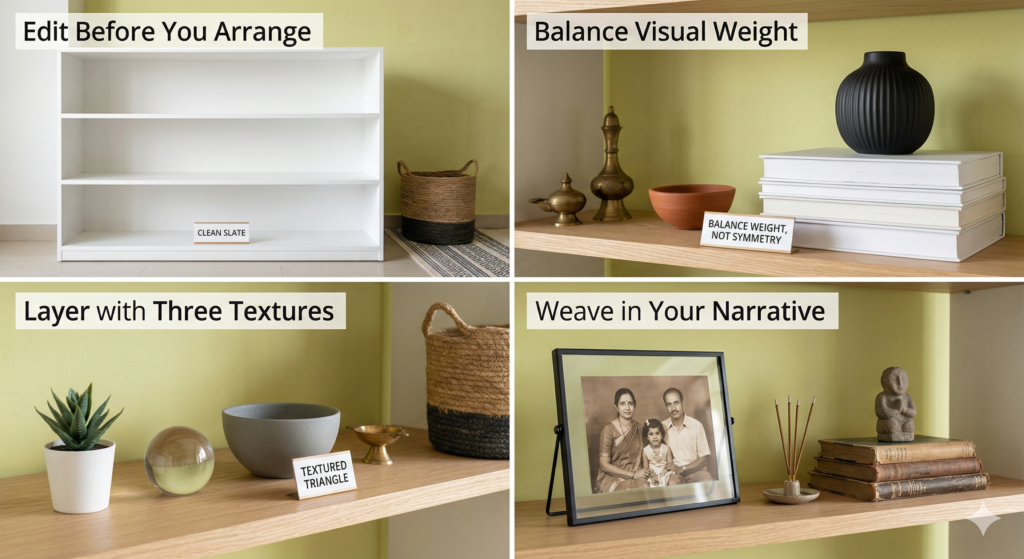
Before you even think about placing that stunning new ceramic piece, you must do the hardest part: take absolutely everything off. Yes, every single book, frame, and trinket. Wipe down the wood, metal, or glass, and simply look at the empty space for a moment. This visual reset is absolutely crucial. If you try to style around existing items, you aren’t really designing; you are just rearranging clutter. An empty shelf allows you to see the true architecture of your space without bias. You will suddenly notice the height between the tiers, the way the natural morning light hits the corners, and the exact depth you have to work with. Treat this blank canvas as a deep breath for your room. By starting from zero, you force yourself to be incredibly intentional about what earns a spot back on display. You are no longer just storing objects; you are curating a meaningful collection, ensuring that every vase, heirloom, and book you choose to feature truly deserves its moment in the spotlight.
Balance the Visual Weight
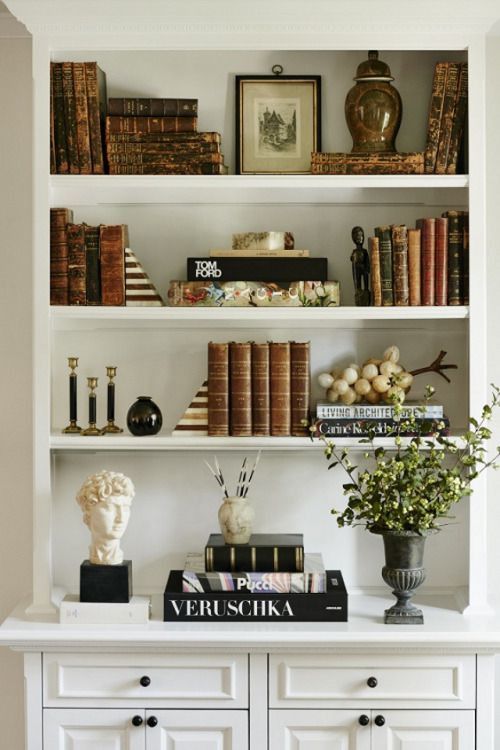
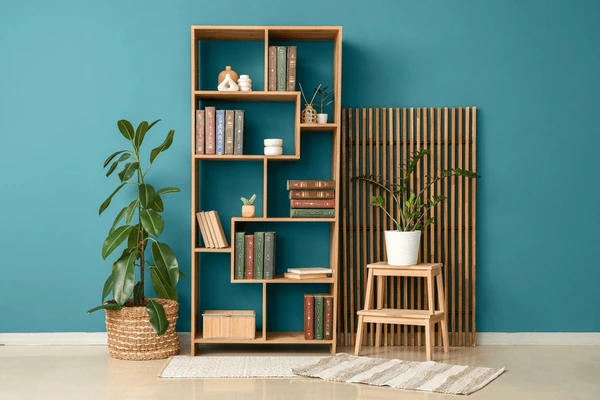
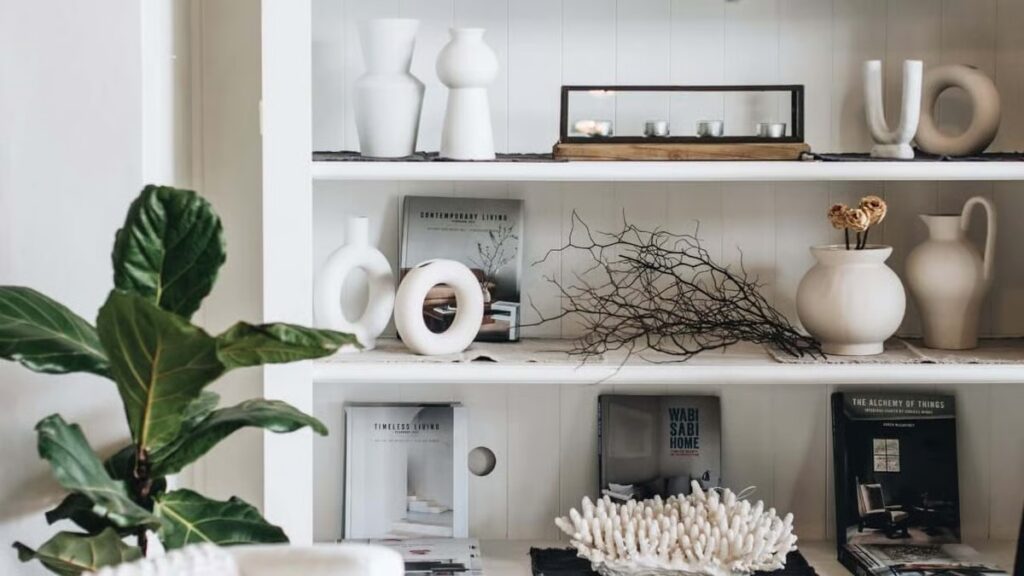
Step back every few minutes and look at the whole unit. If all the “heavy” items (dark books or large vases) are on one side, the shelf will feel lopsided. Distribute weight evenly—if you have a large vase on the top left, place a heavy stack of books on the bottom right.
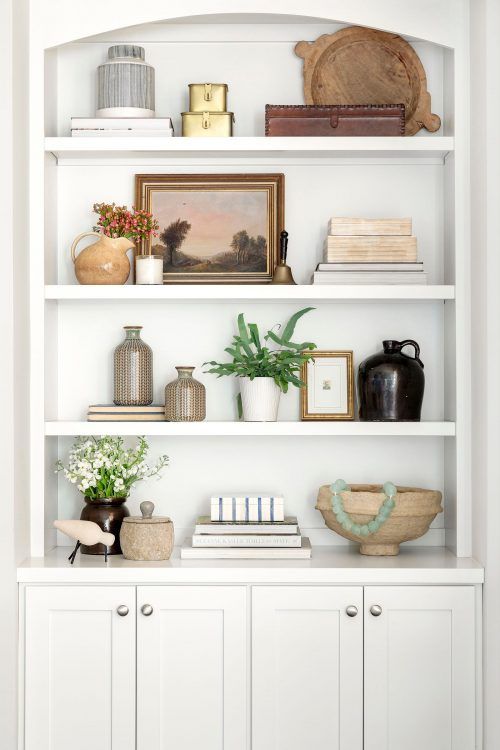
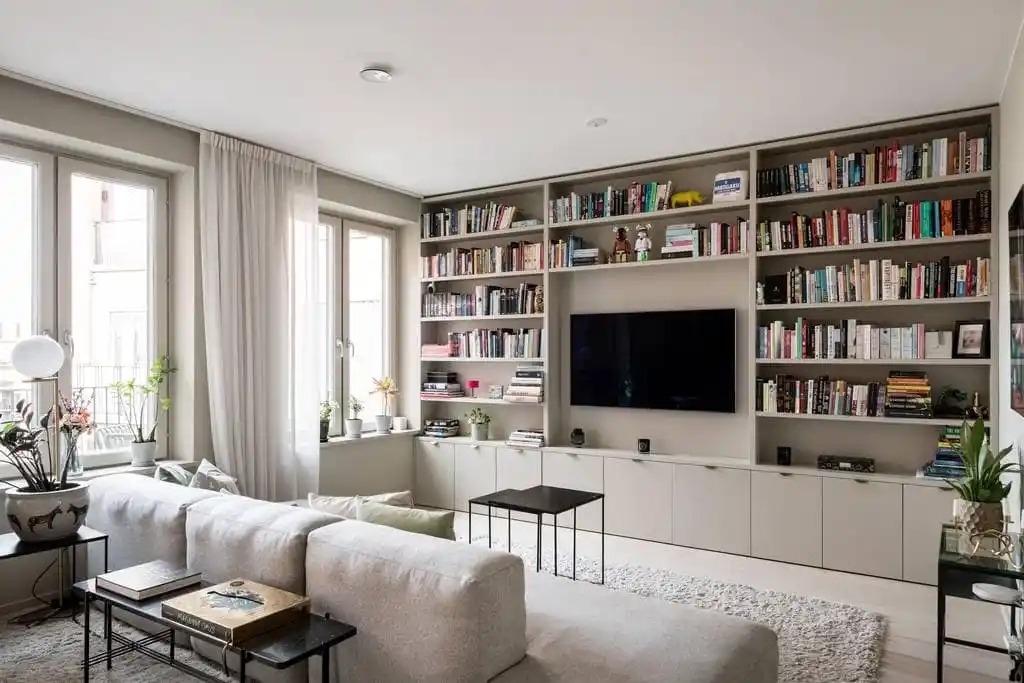
Remember that “visual weight” doesn’t necessarily mean physical weight. A small, densely dark, matte black ceramic bowl will draw the eye much more strongly than a tall, transparent ribbed glass vase. Color, texture, and opacity all play a huge role in how heavy an object feels in a space. This is why the “step back” method is your best friend. When we get too close, we tend to hyper-focus on styling one individual shelf beautifully, completely forgetting how it interacts with the shelf immediately above or below it. By physically stepping back across the room, you can blur your eyes slightly to see the overall distribution of shapes and colors. You are looking for a harmonious, diagonal flow—a gentle “Z” pattern of heavier objects that anchors the unit and prevents it from feeling top-heavy or cluttered on one side. If a particular corner feels too intense, don’t be afraid to pull an item away entirely. Sometimes, simply introducing a pocket of empty, negative space is the exact counterweight needed to restore perfect balance and bring a profound sense of calm to the entire arrangement.
Play with “Negative Space”
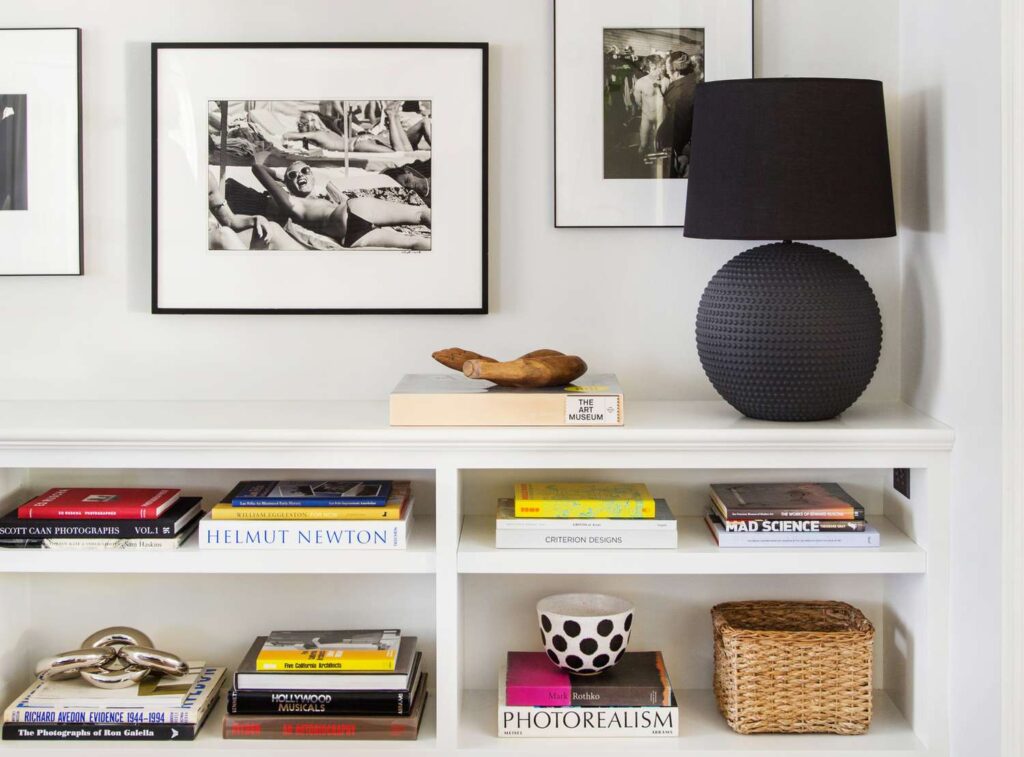
You don’t need to fill every inch of the shelf. Negative space (the empty areas) is what allows your decor to breathe. If a shelf is too crowded, the individual beauty of your Kiruofficial pieces gets lost.
Add a Touch of Greenery
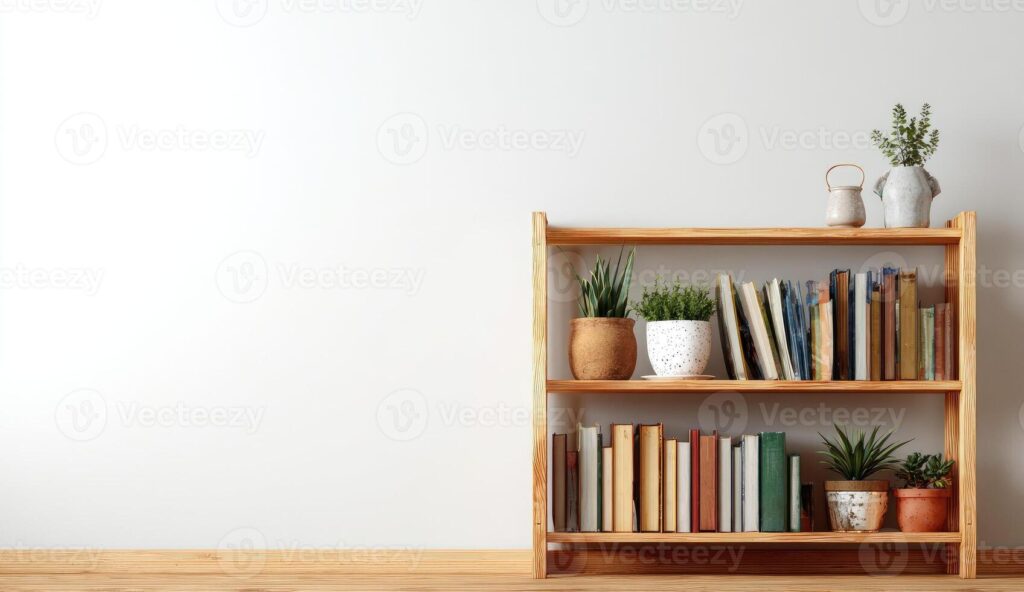
A bookshelf can feel “stiff” with just paper and ceramic. Soften the look by adding a trailing plant (like a Pothos) or a single dried eucalyptus stem in a narrow-neck vase. The organic shapes break up the straight lines of the shelves and books.
Balance the Visual Weight
Step back every few minutes and look at the whole unit. Distribute weight evenly—if you have a large vase on the top left, place a heavy stack of books on the bottom right.
1. The Power of “Leaning” Art
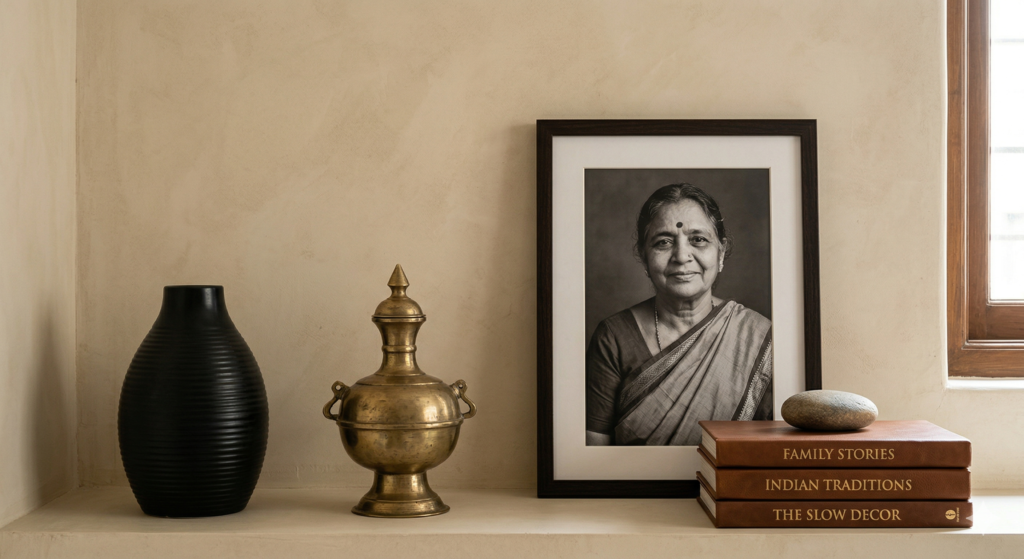
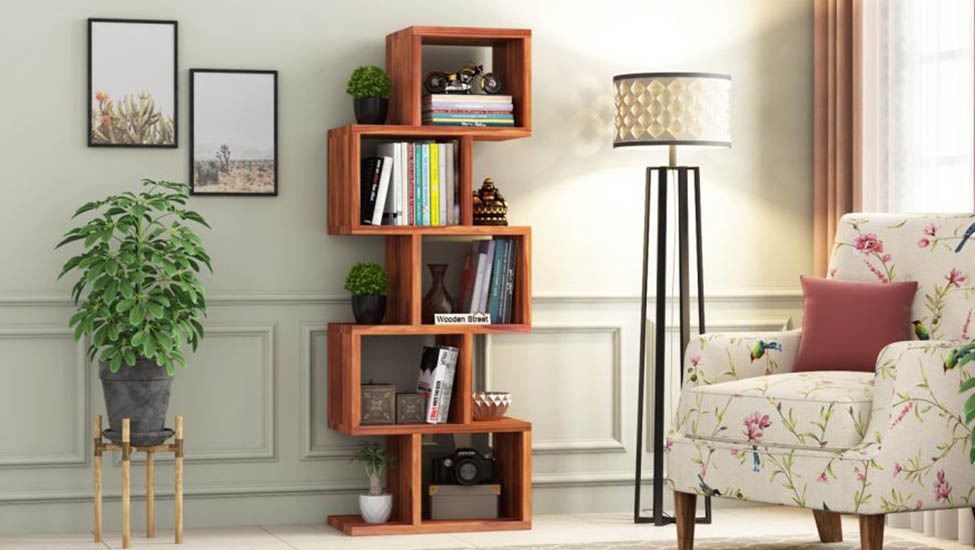
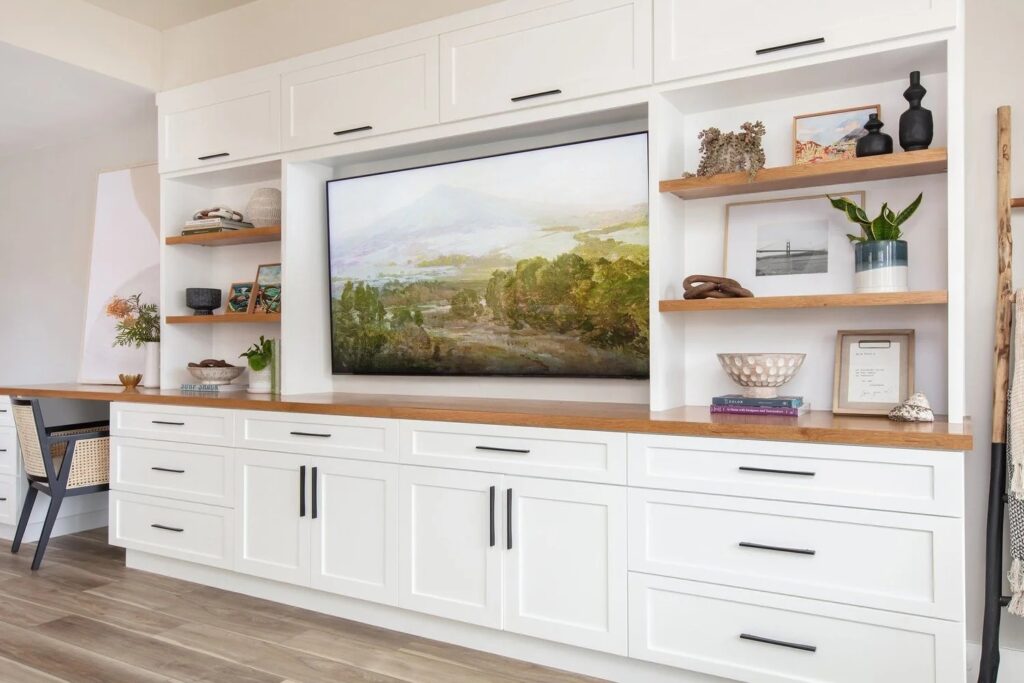
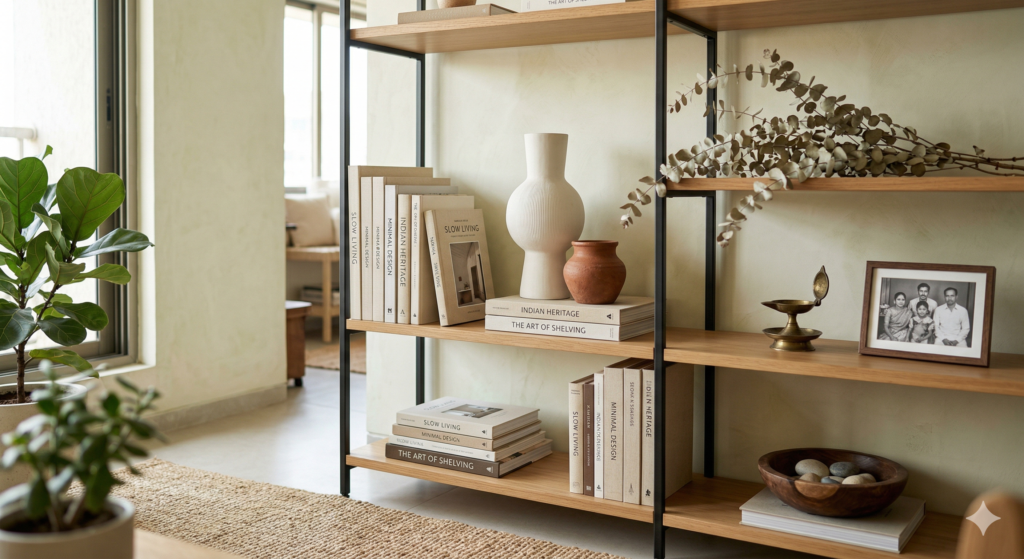
While we often think of shelves as horizontal surfaces for standing objects, the vertical “back wall” of a shelf is prime real estate for adding depth. Instead of hanging small frames, try leaning a piece of minimalist art or a black-and-white family photograph behind a smaller Kiruofficial vase. This layering technique creates a “foreground” and “background,” instantly making the shelf feel more like a professional gallery and less like a flat storage unit.
2. Curate by Color, Not Just Category
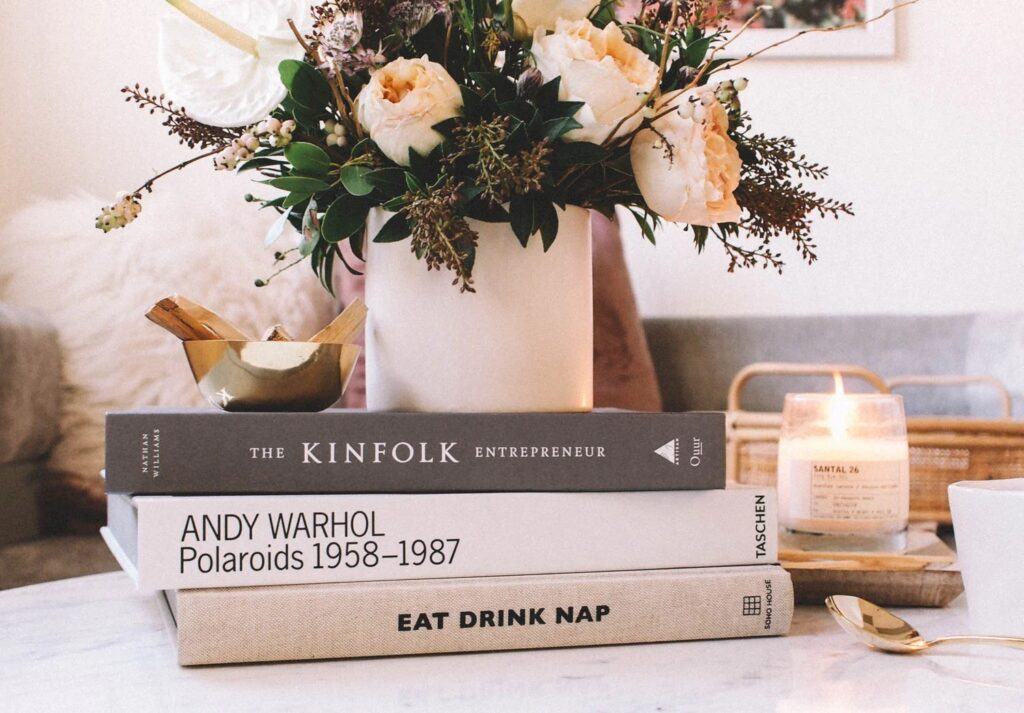
In a busy household, book spines can create a “rainbow of chaos” that pulls focus away from your beautiful decor. To achieve a high-end look, try grouping your books by the color of their spines. Even a small cluster of all-white or all-neutral books can act as a calm visual anchor. If your collection is too vibrant, try turning the spines inward to face the back of the shelf; the exposed “paper-edge” look adds a warm, creamy texture that complements raw ceramic beautifully.
3. Incorporate “Found” Objects
A professional stylist knows that a home should never look like it was bought entirely from a single store. Interspersing your modern vases with “found” objects—a smooth river stone from a favorite trek, a piece of driftwood, or a vintage brass magnifying glass—adds an element of the unexpected. These items break the rhythm of manufactured goods and introduce a layer of personal history that sparks curiosity and conversation.
4. Respect the “Breathe” Room
One of the most common mistakes is “over-styling”—the urge to fill every gap with a tiny trinket. In professional design, we call this “visual noise.” If a shelf feels heavy, try removing 20% of the items. That empty “negative space” isn’t wasted; it is a deliberate choice that allows the eye to appreciate the silhouette of a single, stunning vase or the rich grain of the wood. A shelf that breathes feels expensive and intentional.
5. Lighting as the Final Layer
Even the most perfectly arranged shelf can look flat in a dimly lit corner. Consider the “Golden Hour” of your room. Adding a small, wireless LED “puck” light to the underside of a shelf or placing a slim, warm-toned lamp on a stack of books can transform the entire mood. Lighting creates shadows and highlights that accentuate the “Touch-Me” textures of your ceramics, making the arrangement glow with a welcoming, high-end energy.
6. The “Triangle” of Texture
When selecting items for a single shelf, aim for a “texture triangle” consisting of three different materials: something organic (like a plant or wood), something smooth (like glass or glazed ceramic), and something matte (like paper or unpolished stone). This contrast ensures that the arrangement feels dynamic. The friction between a smooth, ribbed glass vessel and a rough, hand-bound book creates a sophisticated sensory experience that keeps the eye engaged.
7. Organizing for Daily Life
While aesthetics are key, a shelf in an Indian home must also remain functional. If your shelving unit is in an entryway or living area, incorporate a “catch-all” vessel—like a low, wide Kiruofficial bowl—at eye level. This becomes the designated home for keys, loose change, or mail. By giving these “everyday” items a beautiful, intentional home, you prevent the rest of the shelf from being cluttered by the debris of daily life.
8. Scaling for Impact
Varying the scale of your objects is a secret weapon for creating drama. If all your vases are the same height, the shelf will look monotonous. Try pairing a tall, slender floor-length vase (if the shelf height allows) with a tiny, round bud vase. This extreme difference in scale creates a “tall-and-small” dynamic that feels modern and architectural. It’s a bold way to play with the verticality of your room.
9. The Seasonal Edit
A shelf should never be static. Professional stylists treat shelving as a “seasonal rotation.” In the summer, you might favor light, clear glass and breezy botanical prints. As the monsoon or winter approaches, you can swap those out for heavier, darker ceramics, brass elements, and stacks of thicker, cozy reads. This minor “editing” keeps your home feeling fresh and aligned with the natural rhythm of the year outside.
10. Honoring the Heritage Piece
Finally, never underestimate the power of a single heirloom. In a contemporary setup, a vintage, hand-carved wooden block (used for traditional textile printing) or an old brass lota can act as the “soul” of the arrangement. These pieces bridge the gap between Kiruofficial’s modern aesthetic and your family’s history. When you place a piece of your past next to a piece of your present, the shelf stops being just a piece of furniture and becomes a living story of who you are.
Key Takeaways for the Minimalist Stylist
-
Edit Before You Arrange: Take everything off your shelves first. A blank canvas is necessary for mindful curation. This physical and visual reset allows you to assess the pure architecture of your shelves without bias, helping you see the space from a professional stylist’s perspective. It forces intentionality; by starting from zero, every single vase, book, and artifact you place back must earn its spot, ensuring the final arrangement feels authentically collected rather than casually accumulated.
-
Balance Visual Weight, Not Physical Symmetry: Mix tall vases with short book stacks. Step back and squint to find a diagonal, harmonious flow across the entire unit. Remember that visual weight is dictated by density, color, and texture just as much as size. A small, dark, matte ceramic bowl may draw the eye more strongly than a tall, transparent glass vessel. Use the ‘squint test’ every few minutes by physically walking across the room; this helps you assess the overall distribution of ‘weighty’ shapes and prevents the unit from feeling lopsided or top-heavy.
-
Layer with Three Textures: For a dynamic display, ensure every group of objects includes at least three textures—something organic (plants/wood), something smooth (glass/ceramic), and something matte (paper/stone). This sensory friction prevents an arrangement from feeling sterile and flat. Contrast is key: the smooth, glossy jacket of a coffee table book gains sophistication when placed next to a raw, unpolished terracotta vase, while the delicate, silver-green leaves of a dried eucalyptus branch introduce a soft, life-affirming organic shape that breaks up the rigid geometry of the shelving unit itself.
-
Honour Negative Space: Do not fill every gap. Leaving deliberate, empty space allows your most beautiful items to finally breathe and be seen. Embrace the void as an active design element. In professional design, this silence on the shelf acts as a crucial visual resting place, lowering the visual noise of the room and preventing your shelves from feeling like a dusty storage rack. By allowing for generous gaps, you transform your selected decor from ‘stuff’ into curated art, proving that sometimes, the most sophisticated design choice is the one you didn’t make.
-
Weave in Your Narrative: Always include a personal heirloom, a piece of found nature, or a family photograph. The most beautiful shelves are the ones that tell your unique story. A shelf should never look like a generic store display. In an Indian home, this is where you bridge the gap between Kiruofficial’s modern aesthetic and your history. Pair your minimalist vases with a vintage brass artifact passed down from your grandmother or a small, framed black-and-white family photo; this friction between ‘old’ and ‘new’ is what grounds a space in soul and makes it undeniably yours.
End with a Slow Pause
The next time you walk past your bookshelf and feel a pang of visual anxiety, remember that a beautiful, calming home is built by choice, not by chance. Shelving is one of the easiest and most profound ways to introduce that signature “Kiruofficial” feeling of serene intentionality into your daily life.
Take a single afternoon to apply these steps. Let it be a meditative exercise of choosing what you want to look at, touch, and engage with. By elevating your objects, you are essentially elevating your daily experience, proving that sometimes, the simple act of arranging a ribbed vase next to a stack of your favorite books is all it takes to find your center.
Happy styling, and let your home finally breathe!